
The Valedictorian and the Underdog
In 2008, a young man graduated from law school second to the last in his class. The Great Recession was raging, legal jobs openings were slim even for top graduates, and his prospects looked incredibly grim.
But he had a hidden superpower: he had chosen a state university, worked multiple jobs in the summer and part-time during school, and graduated completely debt-free with a small cushion of savings.
Because he had no monthly payments breathing down his neck, he took a risk and opened his own practice. For thirteen months, he made next to nothing, sometimes taking cases for free just to get experience. Then, the tide turned. Business picked up so fast that he needed to hire help.
He ended up hiring the valedictorian from his exact same graduating class. That top student was brilliant, but he was drowning in student loan debt and desperately needed a regular paycheck just to stay afloat.
The real trap of debt isn’t just the interest rate. It’s how it suffocates your options and limits your potential. When you don’t have your own plan, you simply become part of someone else’s.
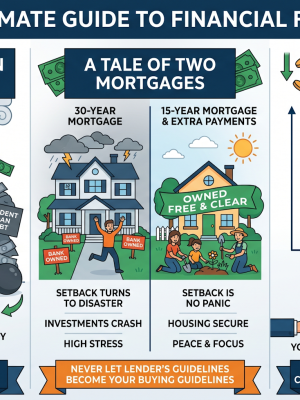
A Tale of Two Mortgages
The choices you make with debt can turn a sudden setback into a total disaster. Take two homeowners who face the exact same scenario: a sudden job layoff during a major recession.
The first homeowner followed the standard lender’s advice and took out a thirty-year mortgage. By year twelve, the recession hits, their investments crash, they fall behind on payments, and foreclosure looms. They aren’t just looking for a job, they are forced to hunt for a job with ten times the stress because they are fighting to keep a roof over their family’s head.
The second homeowner ignored the lender’s guidelines. They opted for a fifteen-year mortgage and paid extra toward the principal whenever they could. By year eleven, they own the house free and clear. When the layoff hits in year twelve, there is no panic. They can look for their next career move with peace and focus because their housing is secure.
The moral is: Never let a lender’s guidelines become your buying guidelines.
The Fiduciary
Wall Street loves to pitch a strategy called debt arbitrage. Financial advisors routinely tell clients to borrow money rather than paying cash, claiming you’ll build more wealth by keeping your money in the market.
A retiree named Jason got this advice from his financial advisor. He had the cash ready to pay for a $100,000 garage addition to store his car collection. His advisor intervened, arguing that his market returns were beating the cost of a loan, so Jason financed the project instead.
Shortly after, the market crashed. Jason’s portfolio plummeted, forcing him to severely cut back his retirement lifestyle. To make matters worse, he was stuck with an unnecessary monthly loan payment that cramped his budget even further.
Ironically, the advisor’s website prominently advertised a “fiduciary” commitment right on the homepage. But when advisors give advice that protects their asset-management fees at the expense of your financial safety, that is a serious conflict of interest. True freedom comes from avoiding unnecessary debt and using a reliable compass to chart your own correct course.

One Response
So,I like it