How One Little Common Mistake Can Cost You $468,082.74
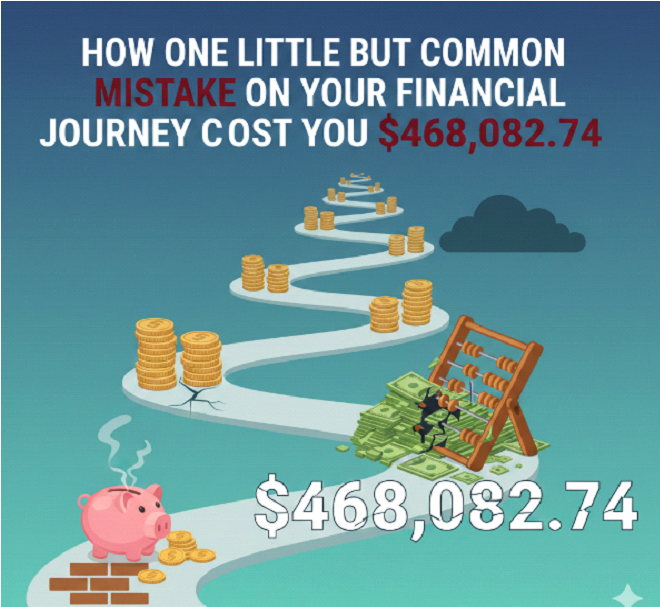
Many people wonder: Should I invest before building a full emergency fund, or wait until I feel financially safe with a fully funded emergency fund? Getting that order wrong can be staggeringly expensive. While most think success is about discipline, it often comes down to something far simpler: getting the sequence right. The “Responsible” Mistake Common advice says you should fully fund a 3–6 month emergency fund before you start investing. It sounds responsible. But that single sequencing mistake can quietly cost you hundreds of thousands of dollars. Ron’s Story Ron is a 25-year-old accountant. After paying off his consumer debt and student loans, he faced a choice. He chose to follow the Trail Marker sequence. He already had his Starter 3% Protection Fund (Trail Marker #2). He moved into Wealth Accumulation (Trail Marker #4), investing 15% of his income. He built his Smart Protection Fund (Trail Marker #5) while investing. He didn’t delay growth; he built protection and growth together. The Math Most People Miss If Ron had delayed investing for just one year to “top off” his emergency fund, here is the price of that delay: Factor Value Monthly Investment $900 Annual Return 10% Duration of Delay 12 Months Total Invested at Age 25 $11,376.48 That single missed year, left untouched for 40 years, equals $468,082.74 by age 65. Nearly half a million dollars lost—simply by getting the order wrong. And that doesn’t even account for lost employer matches or tax-free growth in a Roth IRA. Realistically, the loss exceeds a half-million. “But What About Emergencies?” This isn’t about being reckless. It’s about avoiding unnecessary opportunity loss. Ron had his starter protection in place. He wasn’t ignoring risk; he was managing it while his money compounded. The Bottom Line This is how people unknowingly lose massive amounts of wealth: by following “good” advice in the wrong order. Clear direction beats misdirected speed every time. Ready to find your true north? If you’d like the full explanation of all nine Trail Markers and the reasoning behind this sequence, the complete framework is laid out in my book, The One-Page Wealth Compass.
Clear direction beats misdirected speed every time.
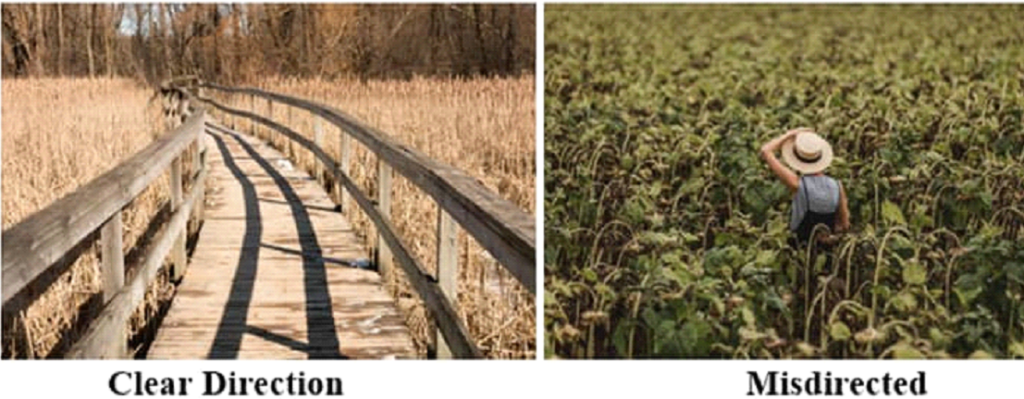
“Clear direction beats misdirected speed every time.” In my book, One Page Wealth Compass, I share this principle because we often focus on the Hare’s speed, forgetting that his lack of focus left him lost in the weeds. The Tortoise didn’t win just because he was slow; he won because he never had to recalibrate his direction.Your One Page Wealth Compass is your unfair advantage—it ensures that every step you take, no matter the pace, is moving you closer to the finish line while everyone else is sprinting in circles. “Clear direction beats misdirected speed every time.” In my book, One Page Wealth Compass, I share this principle because we often focus on the Hare’s speed. We forget that his lack of focus left him lost in the weeds. The Tortoise didn’t win just because he was slow. He won because he never had to recalibrate his direction. Your One Page Wealth Compass is your unfair advantage. It ensures that every step you take, no matter the pace, is moving you closer to the finish line—while everyone else is sprinting in circles. Visit Previous Post Buy now book
Why Most People Walk in Financial Circles—and How to Find Financial Freedom at Any Age

Lost in the Financial Woods? Your Compass Starts Here. Scientists at the Max Planck Institute dropped volunteers into a dense German forest with one simple task: walk in a straight line to reach the edge. They were confident, capable people who trusted their sense of direction. But as soon as the sun disappeared behind clouds, something remarkable happened. Even though participants were absolutely convinced they were walking straight, GPS trackers revealed they were actually wandering in circles, sometimes looping right back to where they started. Without a clear point of reference, even the most confident hikers drifted off course with every step The same thing commonly happens with money. You work hard. You make what seem like smart decisions. You save when you can and spend responsibly. But without a reliable compass to guide your financial choices, you can end up walking in circles for decades without being aware of it. You might actually get frustratingly close to financial security, only to make one wrong turn that leads you right back into the financial wilderness. I know because I lived it—and I have the financial scars to prove it. The Day My Financial World Collapsed At age 63, I knew my retirement prospects were shaky, but I thought I had six more years to fix it. Then life hit me with a devastating blow that shattered my financial future. That’s when I realized I’d been walking in financial circles my entire adult life, just like those people in the German forest. What I Discovered When Failure Wasn’t an Option This book exists because I refused to accept that starting at 63 meant certain failure. When I was fired with barely two years of savings, traditional wisdom would say it was too late. But desperation is a powerful teacher. With no margin for error, I consumed over twenty books, countless podcasts, and endless research—this wasn’t a hobby, this was survival. I had to figure out what actually worked versus what sounded good but failed in practice. What I discovered changed everything: the principles that took me from nearly broke at 63 to financially free at 69 aren’t complex. They’re just buried under an avalanche of conflicting advice, hidden fees, and well-meaning “helpers” whose interests don’t always align with yours. I wrote this book for one reason: to save you from wasting 20 or 30 or even 40 years like I did. If I can build financial freedom starting dangerously late, imagine what you can do with more time. This isn’t theory from an ivory tower—it’s a battle-tested compass forged in the desperation of someone who had to get it right or lose everything. The principles inside these pages work at any income level or any age and adapt to any starting point. What You’ll Discover: ⦁ The 7-Step Wealth Accelerator that turned a tiny nest egg into seven figures in under six years—achieving what most take 30 years or more. ⦁ The True Retirement Countdown: Stop guessing. Discover the single number that instantly tells you if you can retire today. ⦁ End the Wall Street Tax. Invest like a pro and stop letting hidden fees steal your financial future. ⦁ Set It and Forget It Wealth: Build a fully automated evergreen portfolio that requires less than 30 minutes per month to manage and outperform the “experts”. Here’s What Makes This Different I’m not going to promise you’ll retire a millionaire by age 30 (though some of you might). I’m not going to sell you on complicated strategies that only work in theory. And I’m definitely not going to pretend that building wealth is effortless. What I will show you is something far more valuable: a simple, reliable compass that keeps you moving toward financial freedom, no matter what storms hit your life. The goal of this book is to help you achieve Financial Freedom. To me, that means having enough passive income to cover your living expenses without requiring a paycheck. This isn’t about becoming a billionaire or living lavishly; it’s about having choices and security—the freedom to live life on your own terms. Because here’s the truth those lost hikers discovered—and a lesson I learned late that saved me when others said it was too late, having the right direction matters more than how fast you’re moving. This approach works no matter your career, whether you’re an employee, an intrapreneur, an entrepreneur, or already retired. You don’t have to keep wandering in financial circles. The compass that guided me out of the financial wilderness is right here in your hands. Whether you are just starting out or looking to sharpen your strategy, a clear map makes all the difference. Join my newsletter to download the one-page PDF I use to stay on track. Let’s find your way to financial freedom, one clear step at a time. Visit Hitting Rock Bottom at 63 Buy PDF Book
Hitting Rock Bottom at 63

How Getting Fired at 63 Triggered a Career Change and Financial Freedom at 69 Two words shattered everything I thought I knew about career security and financial freedom at 69. The elevator doors closed behind me for the last time on a late Tuesday afternoon. Eighteen years reduced to a cardboard box. “Effective immediately.” income Two words that shattered everything I thought I knew about security, loyalty, and my place in the world. I’d heard those words in movies and read them in news articles about other people’s lives. I never imagined they’d be spoken to me in the familiar conference room where I’d celebrated important team wins and participated in countless meetings for nearly two decades and enjoyed financial freedom at 69. The senior manager’s voice seemed distant and muffled as he continued with the standard script—turning in my office keys, my company computer, and my company car. But all I could think of was, “Is this really happening?” Eighteen years of early mornings, late nights, missed family dinners, and weekend emails. Gone. I mindlessly pulled personal items from drawers I’d organized many times before: a water bottle, family photos, a framed recognition certificate that suddenly felt like a cruel joke, and my son’s crayon drawing from third grade —the one where he’d drawn me in a suit with a big smile, labeled “My Dad the Important Man.” Important. Right. It was a hot Phoenix day as I fumbled to open the car door holding a cardboard box. The weight of the box felt like nothing. The weight of what it represented crushed me. As the heat poured out of my car I thought, “How did that even happen?”My thoughts soon shifted to survival. The math was brutally unforgiving—at sixty-three, I was on track to be broke by 65. Our savings wouldn’t last a full year. After that, nothing. No pension. No backup plan. If we raided our 401K that might give us a little more than a year. I’d planned to work seven more years, not because I loved the job, but because I had to. Now salary, car, benefits – gone! My world imploded in a fifteen-minute meeting that began with pleasant small talk about a recent corporate dinner. Mary would be starting dinner soon, completely unaware that our comfortable middle-class life had just imploded. How do you tell your wife of thirty years that the man she trusted to provide for her had failed? She did nothing to deserve this except believe in me. It’s hard to express the regret that was consuming me at that moment. After four decades of work, even the thought of being dependent on government assistance or charity was something I couldn’t allow in my mind. This was a financial freefall unfolding before my eyes.income The Pink Slip That Became an Unexpected Beginning But here’s what I couldn’t have known sitting in that scorching car: that devastating day would become the greatest gift of my career. My 18 years there were good—the company treated me very well, and not only do I have no resentment, I’m deeply grateful. Because that crisis that felt like an ending became the beginning of our journey to financial freedom, leading to an amazing seven-figure portfolio by age 69—something I never thought possible. What surprised me most was discovering that 69 wasn’t the end of our wealth journey—it became the launch pad where our portfolio growth really took off, defying everything I’d been told about aging and money. What I Mean by Wealth This isn’t a story about getting lucky or becoming a billionaire. It’s about getting desperate enough to finally learn that financial freedom —having enough passive income to be comfortable enough to make work optional—is possible at any age when you follow the right principles. Approaching my Financial Cliff My wife, Mary, had been a stay-at-home mom for most of our marriage. We had a young adult son still living at home. Telling her I’d been fired was like admitting I’d failed not just in my career, but as the man she’d trusted to take care of us. When I finally arrived home and explained to her what had happened, her support was unwavering, but I could see the deep worry that she just couldn’t hide in her eyes. We both knew the harsh truth: replacing my substantial income and benefits at my age would be a monumental challenge. The thought of going back into the corporate grind, working for someone else after so many years, felt suffocating. Mentally, I was ready to leave that life behind, but financially, we were in no position to do so. The numbers painted a devastating picture. I kept asking myself: “I had 40 years to build wealth—what happened?” What was I thinking? Where had I been going?” At this late date I now understand I was wandering in circles financially for 40 long years. Do you know how embarrassing that is to admit to myself, let alone put in print? The Job Hunt – A Dead End Despite the knot of dread in my stomach, I knew I had to find a job. I forced myself to apply, sending out resume after resume. The response was underwhelming. A few phone interviews, but never a follow-up. I remember one hiring manager, who sounded quite young, mentioned my almost two decades of corporate leadership but her tone seemed different. She simply said, “We’re looking for someone with a fresh perspective. How would you bring that to our team?” It seemed like she meant, “Is that even possible?” It stung, it felt like my hard-won experience was more of a liability. I could feel their disinterest, the unspoken question: Why would we hire you at 63-years-old when we could get someone half your age, willing to work for half the salary? To be honest, I think we both had the same level of interest in them hiring me. My feeling of desperation grew with each new week. It felt